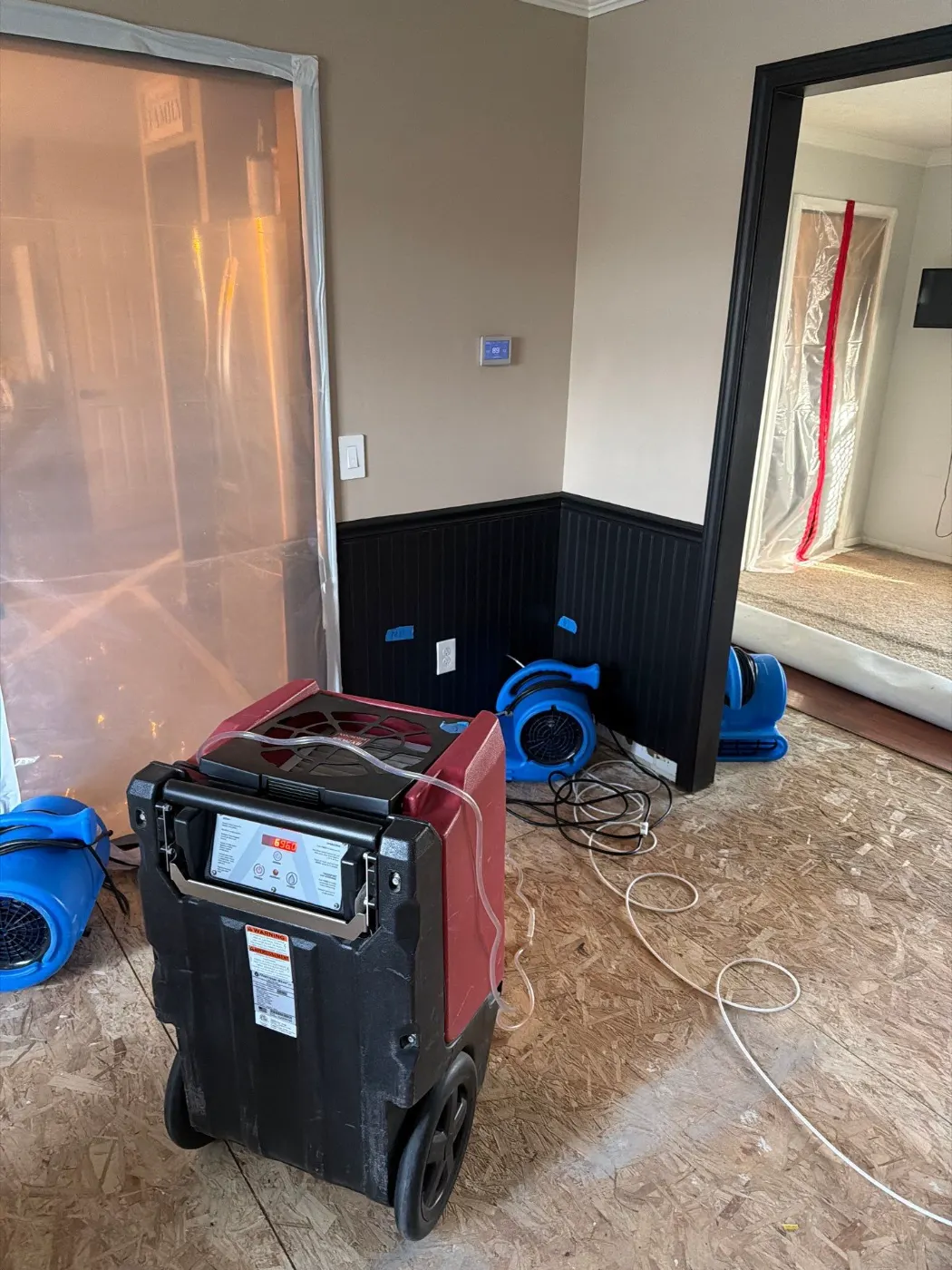
Commercial Storm Damage in New Palestine, IN
Inventory and equipment in New Palestine get protected first, and the drying follows a documented schedule.
Commercial Storm Damage in New Palestine, IN starts with one call to New Palestine Water Restoration: live 24/7 dispatch, IICRC certified response, and honest written scopes before work begins. Call (463) 223-3831.
- Service: Commercial Storm Damage for New Palestine homeowners
- Service area: New Palestine, IN and surrounding areas
- Response time: Rapid emergency dispatch for New Palestine inquiries; crews available 24/7
- Licensed and insured (License #RC21100059)
- Serving New Palestine, IN since 2018
Commercial Storm Damage Cleanup in New Palestine
We handle commercial storm damage cleanup across New Palestine, and we'll work around the parts of the building that need to stay open.
Storms Here
Large hail can hit here, and that puts roofs and rooftop equipment at risk. NWS Indianapolis posts summaries of past storms, which helps when your carrier asks for a date.
We respond to storm calls from businesses anywhere in New Palestine, including those around Doe Creek Middle School and Brandywine Elementary School. We also handle commercial storm damage in Fairland, Morristown, Fortville and Cumberland.
Commercial Storm Damage for New Palestine Businesses
One storm cell crossing Hancock County can put water into several buildings in your portfolio at once, and no property manager can stand in all of them. New Palestine Water Restoration writes each scope in the same format, so a wet suite in New Palestine and a wet warehouse bay at another property read the same way when ownership compares them.
The air gets measured as carefully as the materials. Each day New Palestine Water Restoration records temperature and humidity in the room and at the intake and exhaust of every dehumidifier. When a machine isn't pulling moisture out of the air, those numbers show it, and the setup in your New Palestine building gets adjusted.
Dehumidifiers and air movers draw real amperage, and a commercial floor plate only has so many circuits to give. New Palestine Water Restoration crews calculate the amperage before anything gets plugged in, pull from panels that can carry it, and bring distribution boxes or generator capacity when the panels can't. Equipment placement gets logged by location and run hours, which is also what the carrier's reviewer asks for later.
Carriers look at how fast the policyholder acted. A documented two hour dispatch, extraction the same day, and equipment running that night all show up in the file as mitigation of further loss. New Palestine Water Restoration timestamps the arrival, the first readings and the equipment set, and that record stays with the job whether or not it ends up in a claim at all.
Ownership is going to ask what this costs and how long the space is down. Call New Palestine Water Restoration and a crew dispatches to your New Palestine property, measures what's wet and gives you a drying timeline to work from. The team takes calls across central Indiana at any hour.
Signs You Need Commercial Storm Damage Restoration
If you notice any of these in your New Palestine building, schedule a free inspection before the issue worsens.
Grout between floor tiles darkening in a pattern that spreads a little more each day
Water lines on the lower walls of a dock office or receiving area
Damp, darkened flooring in a band just inside the main entrance after a windy rain
Ceiling tiles sagging, stained brown at the center, or crumbling along the grid in one area of a floor
Insulation batts above the ceiling grid that are compressed, matted, or dripping at the edges
Leak sensors or pit alarms going off in a mechanical room or IT closet during a storm
Standing water ponding on the roof more than two days after the rain stopped
Daylight visible through a roof penetration curb or around the flashing at a rooftop unit
Metal door frames rusting at the base, with the gypsum board around them swelling
Interior wall base swelling, delaminating, or pulling away from the gypsum behind it
How New Palestine Water Restoration Handles Commercial Storm Damage
We follow these steps in order on every New Palestine job.
Water Category Call
Rain that started clean can worsen in category as it sits, so the crew classifies the water as it entered and again as it has aged. That call sets which materials get cleaned in place and which come out.
Cavity Inspection Openings
Where meters or thermal imaging point to hidden water, the crew opens a small inspection hole or lifts a tile. What the probe finds inside decides how much larger the cut needs to be.
Slab and Dock Floor Checks
Concrete at a dock or in a warehouse holds water well after the surface dries, so the crew probes the slab at marked spots and keeps dehumidification and air movement running until the readings level off.
Equipment Out and Space Release
As each area reaches its dry goal, the equipment comes out of it and the space goes back to the tenant. The release date and final readings for every area go in the file.
Closeout File and Walkthrough
A walkthrough with the property manager closes the job, and the crew hands over one organized file with the photos, the readings, the equipment run hours and the scope. Ownership and the carrier's reviewer can read it start to finish.
Commercial Storm Damage in New Palestine
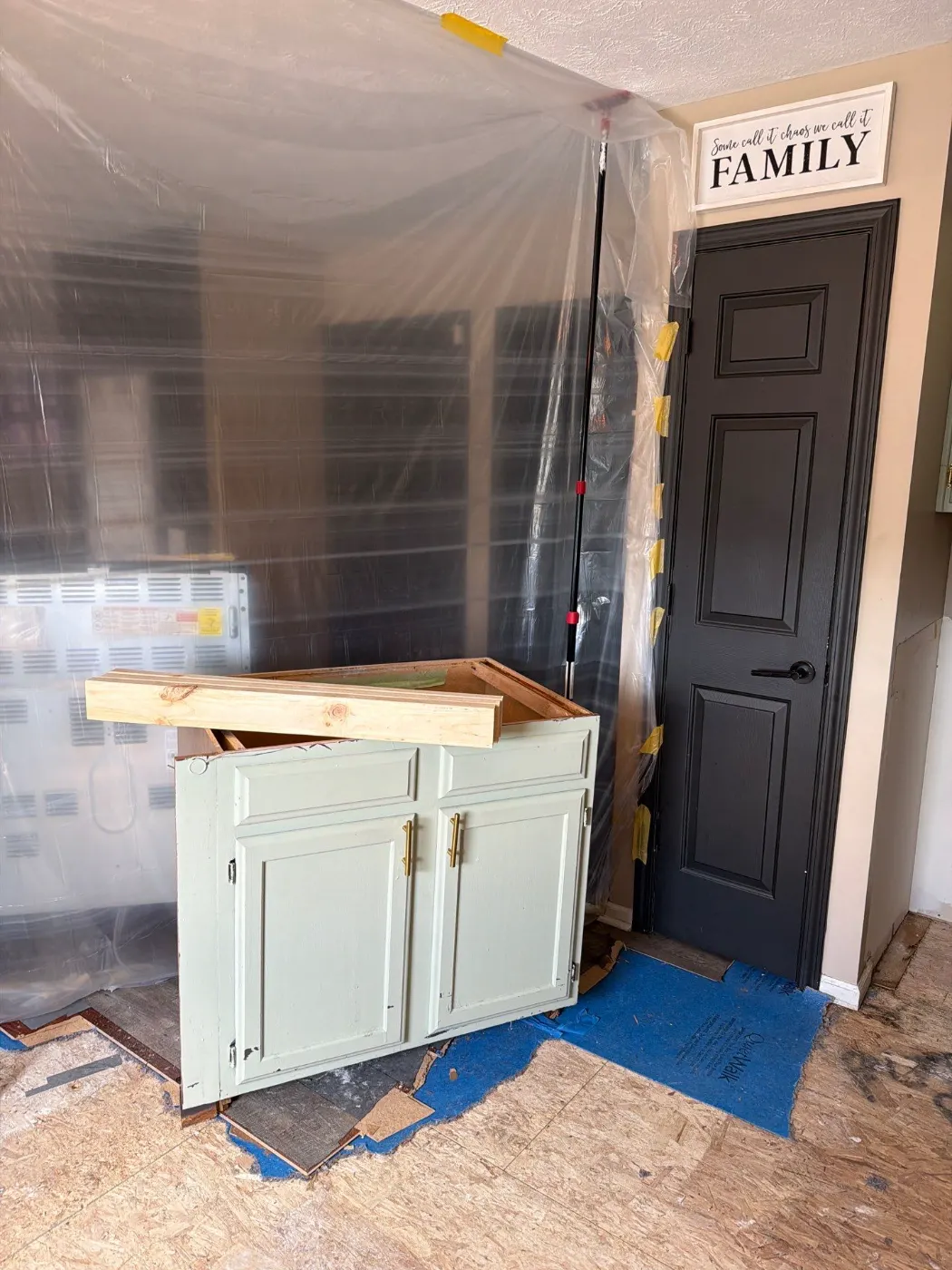
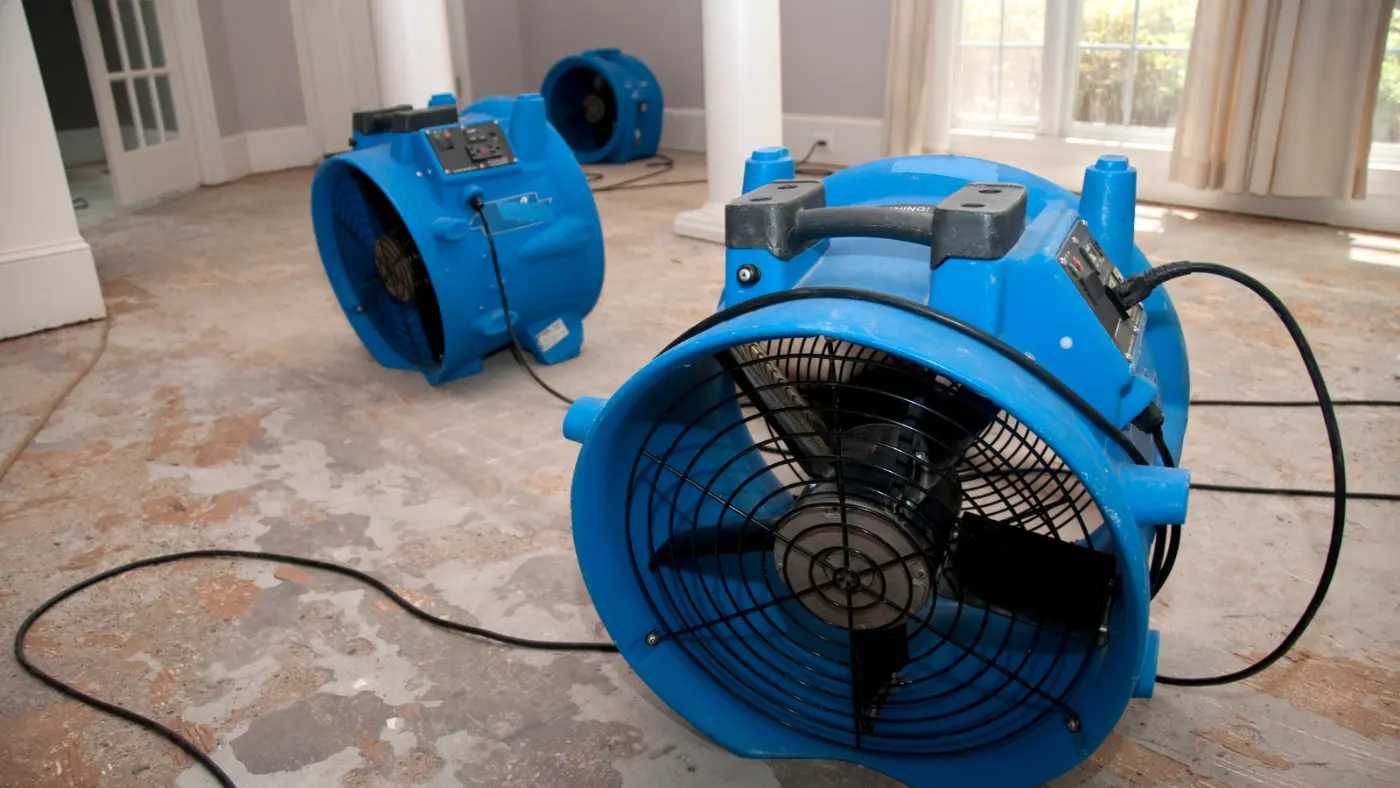
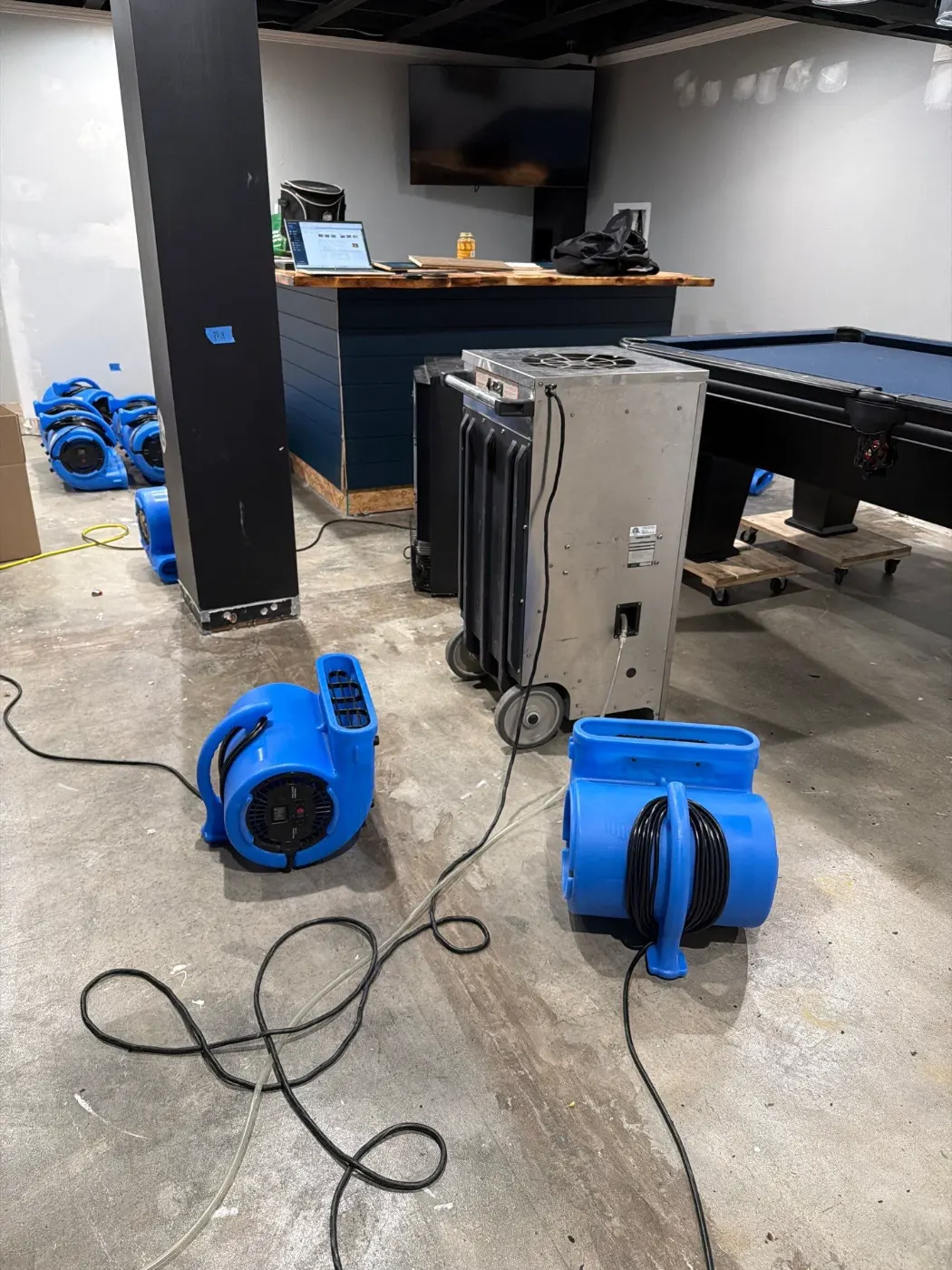
Photographs from real commercial storm damage jobs completed by our crew in New Palestine and surrounding areas.
Commercial Storm Damage FAQ
Questions New Palestine property managers ask us about commercial storm damage restoration.
Guidance and Standards for Commercial Storm Damage
- The National Weather Service office in Indianapolis posts summaries of recent central Indiana storm and flood events. NWS Indianapolis Event Summaries
- The ANSI/IICRC S500 is the published standard for professional water damage restoration. The current edition is the Fifth Edition, 2021. IICRC S500 Standard
New Palestine Neighborhoods We Serve
We take commercial storm damage calls in every part of New Palestine. Pick your neighborhood for local details.
Other Restoration Services in New Palestine
New Palestine Water Restoration handles the full scope of restoration work. Explore our other services below.
Water Damage Restoration in New Palestine
24/7 emergency response. IICRC certified water restoration from extraction to full dry out.
Learn more →Basement Flooding in New Palestine
Basement water emergencies handled fast. Extraction, drying, mold prevention.
Learn more →Sewage Cleanup in New Palestine
Category 3 biohazard cleanup. Full containment, decontamination, structural restoration.
Learn more →Request Commercial Storm Damage Restoration
Reach Us Directly
Our team is available 24/7 for emergencies and ready to schedule inspections during business hours.
Need Immediate Help?
For active water or mold emergencies, call us directly. We are available 24/7.